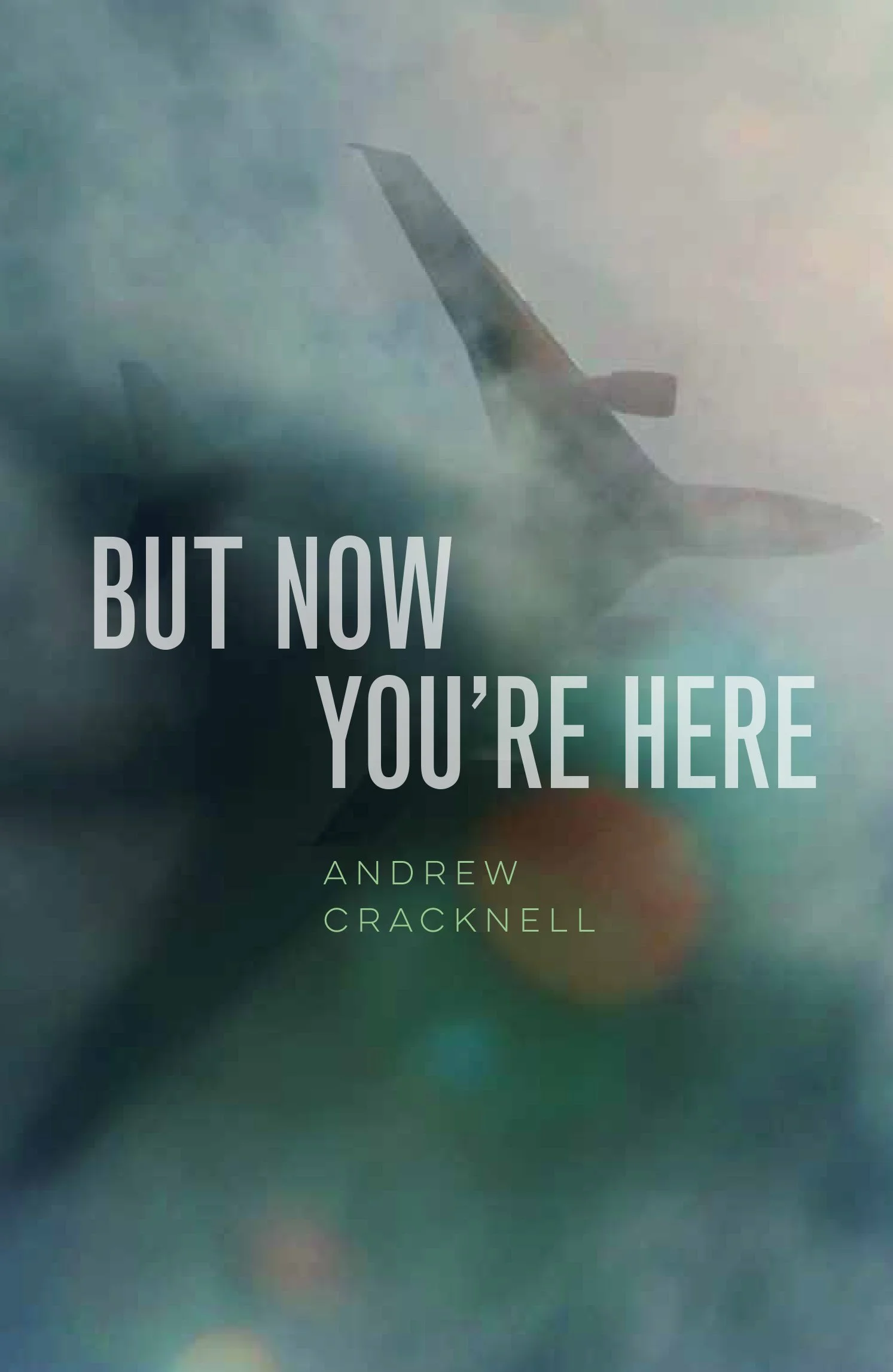
Behind the story / but now you’re here
LEARNING ON THE JOB
Except for a short story in the school magazine when I was 13, But Now You’re Here is the first piece of fiction I’ve ever written. It’s also the first dialogue – apart from snippets I wrote for TV commercials, which would typically be no longer than a response to ‘I bet he drinks Carling Black Label’.
And given that I’d spent a life in a mode of writing in which one of the principle disciplines was compression, précis - I never thought I could write any extended piece. So many times, someone had stood in front of me and told me they'd written a novel. I’d ask what it was about. They'd tell me. And I'd think ‘that’s the whole thing in 4 sentences, maybe 40 words. How did they ever extend that to 85,000?’
But then I sat down and tried and found it quite easy. It was like stretching my legs, as if I'd set out for a walk and decided to keep going further – much further – than my usual route. Sitting at the keyboard and just keeping going. A release of constraint. ‘Go on, indulge your sentence, include “your babies” if you feel like it – you’re not necessarily going to have to kill them in the pursuit of brevity.’
I'd had an idea – an illustration of a syndrome – I’d wanted to write for years. And I just set about doing it in an orderly, chronological unfurling – and unfurling was really what it was like.
And I learnt a lot.
That writing in the first person makes exploring possible motives, nuances or different interpretations of all the characters’ behaviour quite tricky as you can describe life only through the eyes of your narrator. They will be given to the reader only as how he chooses to see and describe them.
(That is why Elizabeth, his sister, exists – almost as an alternative commentator on Jonathan’s life, seeing him and the things he sees, but perhaps telling the reader a different story.)
I’ve learnt that if you’re planning a plot twist, you must be careful in the build-up. The ideal reader reaction is complete surprise but then, on a moment’s reflection, complete acceptance that it makes sense, that it is not far fetched, contrived or incredible. That means laying clues – but then, if you lay too many, it becomes obvious – and a twist is not a twist, a reveal is not a reveal – you’ve had enough clues to know it’s coming, and the surprise was out of the bag chapters earlier.
So it’s a balancing matter – not so little information that the reader just rejects it as ‘cheating’ by the writer in taking the plot any way they want. Not too much information that the reader thinks ‘Well, of course, that was inevitable, no surprise there’. Just enough so they think ‘I didn’t see that coming – but of course, now I see it, it makes perfect sense’.
Background texture is really helpful. When I was researching The Real Mad Men I learnt that Matthew Weiner, the show runner and creator, was a martinet on correct detail. If Don Draper was catching a train from Grand Central to Ossining at 5.10 on Monday July 24th 1961, you could bet your life there was a 5.10 from Grand Central to Ossining on July 24th 1961, and that it was indeed a Monday. It gave a new veracity to Mad Men, which, because of that fidelity, I consider to be almost a documentary anyway.
So in But Now You’re Here the facts are as accurate as I could make them, whether it’s the restaurants (La Comptoir on 63rd did do particularly good chicken), film and theatre dates, flight schedules, sporting fixtures and results, record releases (David Geffen really did start out in the mailroom at William Morris), and current events (that really was the week Margaret Thatcher removed free milk from schools), even down to the weather described on any documented day.
Why? Because for both those of us who were there and those who weren’t, it reinforces a sense of time and place. And for me, it gave confidence that the story I was constructing over and beyond the real world was at least rooted in real world events.